
Every year, humanity produces more than two billion tonnes of waste. Plastic, electronic scrap, and food leftovers – much of it ends up in landfills or in nature. The consequences are polluted oceans, poisoned soils, and an overheated climate. No wonder the call for solutions is getting louder. One answer is the Zero Waste movement. But what exactly does this approach mean, and what influence does it have on our environment? In this article, you’ll learn how far-reaching the impact of Zero Waste really is and why it is much more than a lifestyle trend.
What Does Zero Waste Actually Mean?
The term “Zero Waste” literally means “zero waste” and stands for the ideal of producing no garbage at all. In reality, however, it is not about leaving behind absolutely no waste, but about reducing it as far as possible and handling resources consciously. Zero Waste is a philosophy that questions our entire consumer behavior. It asks us to rethink our habits: What do we really need? Where do our products come from? What happens to them when we no longer use them?
Rather than focusing only on disposal, Zero Waste starts much earlier: at the point of purchase, in consumption, and in our thinking.
The Five Principles: Refuse, Reduce, Reuse, Recycle, Rot
The “5R” rule is at the heart of the Zero Waste approach. It shows you the order in which you should make decisions in order to produce as little waste as possible.
- Refuse: This is the first and most important step. Refuse everything you don’t need. That can be promotional freebies, flyers, single-use plastic, or superfluous packaging. Every “No, thank you” prevents waste before it arises.
- Reduce: Buy less, but better products. With every purchase, consider whether you really need it. Reducing also means simplifying things, living more minimalistically, and approaching consumption more consciously.
- Reuse: Use what you have and find new ways to use it. Whether glass containers, clothing, furniture, or appliances: repairing, upcycling, or passing things on is almost always better than buying new.
- Recycle: If you can neither avoid nor reuse something, recycle it. Make sure to separate your waste properly so that the materials can actually be reused.
- Rot (Compost): Organic waste such as vegetable and fruit peels, coffee grounds, or garden waste doesn’t belong in the residual waste but on the compost – whether in your own garden, on the balcony, or in an organic waste bin.
This order is no coincidence: the higher up a principle is, the more positive its impact on the environment.
Difference from Recycling and Waste Separation
Recycling is important, but it is not a cure-all. Many people believe they are already living sustainably because they separate their waste correctly. But recycling is energy-intensive and cannot work indefinitely. Many materials can only be recycled a limited number of times. Or they are “downcycled,” meaning converted into inferior products that end up in the trash after all.
Zero Waste starts one step earlier: with consumption itself. It is not about how to dispose of waste, but whether you need it in the first place. This way of thinking is crucial, because the best waste is the waste that never arises.
Waste separation naturally remains a necessary part of the system, but it alone is not enough. Zero Waste complements it with more conscious consumer behavior.
Practical Everyday Examples
The term “Zero Waste” may sound abstract, but it can be put into practice very concretely in your everyday life. Here are a few examples of how you can get started right away:
- When shopping: Bring your own bags, tins, and jars! Buy food loose rather than packaged. Avoid single-use products such as pre-packaged snacks, to-go cups, or plastic cutlery.
- In the kitchen: To avoid food waste, plan your meals and freeze leftovers. Use reusable containers instead of cling film. Compost organic waste.
- In the bathroom: Use bar soap instead of shower gel in plastic bottles, bamboo toothbrushes, refill systems, or homemade care products. This reduces your packaging waste enormously.
- On the go: Take your own water bottle and your own coffee cup. Say “no” to straws and plastic lids. Use reusable boxes for takeaway food.
- Clothing and electronics: Buy second-hand, repair broken things, share them with friends, or use swap platforms.
These changes may seem small, but they add up. They send a signal that inspires others, too. Zero Waste begins with you – every day and with every decision.

The Environmental Problems Zero Waste Addresses
Our throwaway society produces enormous amounts of waste that doesn’t simply disappear just because it has been “disposed of.” On the contrary: it burdens air, soil, water, and climate. Zero Waste starts right here by trying to tackle these negative effects at the root. Instead of merely treating the symptoms, it directly addresses the cause, namely excessive consumption and poor use of resources.
Landfills and Their Consequences for Soil, Air, and Water
Worldwide, large quantities of household and industrial waste are stored in landfills. What happens there is anything but harmless. Organic waste rots in the absence of oxygen and produces methane, a greenhouse gas that is about 25 times more potent than CO₂. At the same time, rainwater carries toxic substances such as heavy metals, pesticides, or chemical residues into the soil and groundwater. This so-called leachate is extremely difficult to clean and can destroy entire ecosystems.
Electronic waste is even more problematic. Devices contain mercury, lead, and cadmium – substances that can cause cancer and damage the nervous system. In countries of the Global South, these devices are often “recycled” under catastrophic conditions, by being burned or stored in open pits.
Zero Waste can help massively reduce this burden by simply producing less waste.
Plastic Pollution of the Oceans
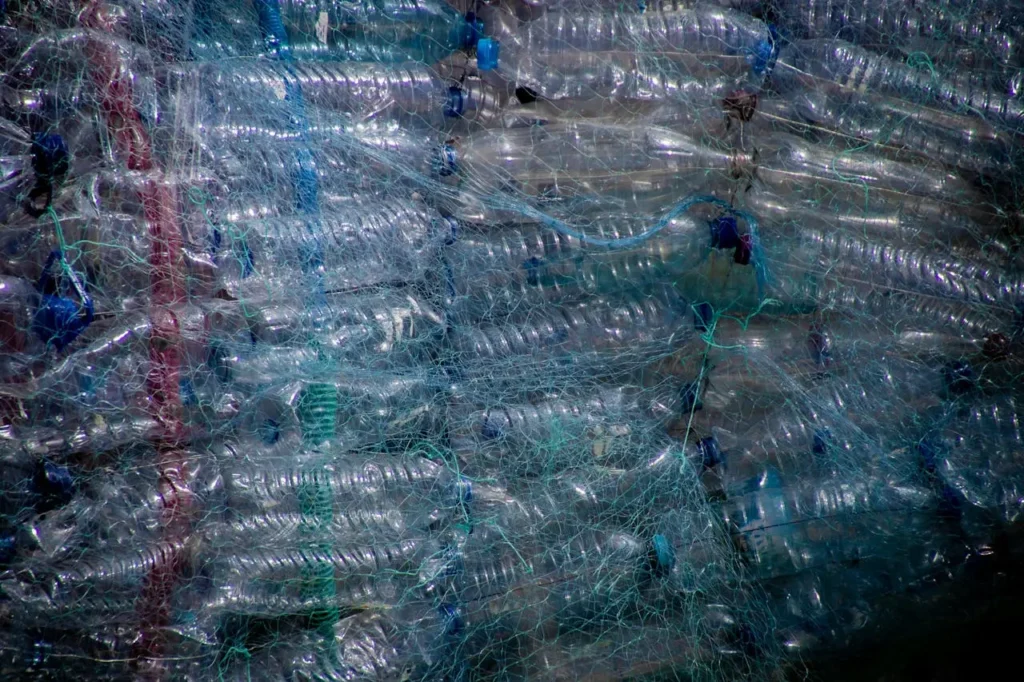
The oceans have by now become humanity’s dumping ground. Plastic above all is omnipresent: bags, bottles, packaging, cigarette filters, and nets drift in the water for decades before slowly disintegrating. The problem is that plastic is not biodegraded but merely breaks into ever smaller pieces – down to microplastics.
Marine animals mistake these particles for food. Turtles suffocate in plastic bags, fish die with stomachs full of plastic, and birds feed indigestible waste to their chicks. Humans are not spared either: microplastics have already been detected in tap water, salt, and even in blood.
Zero Waste aims to stop this plastic wave – not through cleanup campaigns after the fact, but through prevention at the source. If you don’t buy single-use plastic, it can’t end up in the sea.
CO₂ Emissions from Production, Transport, and Disposal
Products don’t come out of nowhere. Their manufacture requires raw materials, energy, machines, and labor – and often long transport routes as well. All of this causes CO₂. The production of new materials is particularly energy-intensive: aluminum, plastics, steel, or paper require enormous amounts of electricity, which often comes from fossil sources.
Even seemingly harmless things like coffee-to-go cups contribute to global warming. Adding up manufacturing, transport, and disposal reveals a clear connection: more consumption means more CO₂.
And that applies not only to the products themselves but also to their packaging. According to the German Environment Agency, packaging waste in Germany alone causes more than 20 million tonnes of CO₂ per year.
Zero Waste breaks this cycle. Whoever buys less, repairs, swaps, and reuses automatically reduces their ecological footprint – and does so significantly.
Zero Waste addresses not just a single environmental problem but several at once – effectively, pragmatically, and for the long term. It is not about living “perfectly,” but about acting more consciously and achieving a big impact with small steps.

Positive Environmental Effects of Zero-Waste Practices
When you reduce your waste, the effects reach far beyond your own bin. You influence supply chains, markets, and production processes – and thereby the environment too. Zero-Waste practices have the potential to radically cut our resource consumption, protect biodiversity, and relieve the climate.
The more people take part, the stronger the effect. The beautiful thing is that many measures cost little or even save money. The impact is all the greater for it.
Reduction of Greenhouse Gases
Every production step – from raw material extraction to transport – causes emissions. If a product is thrown away in the end, all of these CO₂ emissions have practically been produced “for nothing.” It is even worse when waste is incinerated or stored in landfills, because this creates additional greenhouse gases such as CO₂ and methane.
Zero Waste counteracts this development on several levels:
- Less production: If you use things for longer or buy second-hand, less new merchandise is needed. This lowers demand and saves production emissions.
- Less transport: Regional, loose, and unpackaged products avoid packaging and long delivery routes.
- Less disposal: Composting instead of incinerating reduces methane emissions and produces valuable soil instead of harmful gases.
A Zero-Waste lifestyle can reduce your personal CO₂ footprint by several hundred kilos per year without having to accept major restrictions.
Protection of Ecosystems and Biodiversity
Every piece of waste that ends up in the environment can do harm. Animals get entangled in plastic pieces, soils are contaminated by chemicals, and plants die in polluted water. As a result, entire ecosystems are thrown out of balance.
Zero-Waste practices help interrupt these processes:
- Less packaging = less plastic in nature. A single cloth bag replaces hundreds of bags per year.
- Less consumption = less land use. Less production means less deforestation, less mining, and less intrusion into nature.
- Less chemistry = healthier soils and waters. When you use environmentally friendly alternatives and do without problematic products, you protect not only yourself but also the environment.
When you avoid waste, you reduce the pressure on animal and plant life – and that is concrete and visible.
Conserving Resources through Reuse and the Circular Economy
Currently our world operates linearly: we extract raw materials, produce goods, use them briefly, and then throw them away. This system is not sustainable in the long run. The Earth has limits. Raw materials such as copper, phosphorus, or petroleum are finite.
Zero Waste promotes the so-called circular economy, a system in which products are designed so that they can be used, repaired, or recycled again and again. As a result:
- Materials stay in circulation longer instead of ending up in the trash.
- Less new production takes place, which saves raw materials and energy.
- New business models emerge, such as repair services, rental systems, or sharing platforms.
If, for example, you reuse a glass bottle several times instead of buying plastic bottles every week, you drastically lower your resource consumption and show industry that alternatives are in demand.
Less Microplastic in Soils and Waters
Microplastic arises through abrasion, disintegration, or the direct introduction of plastics into the environment. Via wastewater, waste, clothing, or tire wear, it reaches soils, rivers, and seas – and ultimately our food as well.
Zero-Waste practices help reduce this invisible burden:
- Avoiding single-use plastic and synthetic clothing: The fewer plastic products you use, the less microplastic is produced when they disintegrate or are washed.
- Using wash bags (e.g., Guppyfriend): These capture microfibers during washing.
- More glass, stainless steel, and natural materials in everyday life: They release no particles and last much longer.
Less microplastic means healthier soils, cleaner water, and a lower health risk for humans and animals.
Zero Waste means more than just “less waste.” It is a comprehensive environmental concept that protects climate, nature, and health at the same time. Every small step counts – and together they can initiate a major turnaround.
Zero Waste in Action: Successful Initiatives Worldwide
Zero Waste has long since ceased to be just an individual project. Around the world, cities, countries, companies, and committed groups are implementing comprehensive strategies to avoid waste and keep resources in circulation. Experience shows that with political measures, good design, and public participation, real change is possible – at all levels.
Cities and Countries with Zero-Waste Strategies
Some cities have recognized that sustainable change only succeeds when it is thought of systemically. Here are some pioneers:
- San Francisco, USA: The city is considered one of the pioneers of the Zero Waste movement. It has been pursuing an ambitious waste policy since the 1990s. Waste separation is mandatory, composting is actively promoted, and there are comprehensive education programs. The goal is to be completely waste-free by 2030. Already today, the city recycles and composts over 80% of its waste – a global top figure.
- Ljubljana, Slovenia: Slovenia’s capital is the first European Zero Waste capital. Single-use plastic and waste incineration were pushed back there, while municipal waste separation and reuse centers were strengthened. The result is impressive: a recycling rate of 70% and steadily declining amounts of residual waste.
- Kammern im Liesingtal, Austria: This small municipality halved its amount of residual waste within a few years – through targeted education and free reusable systems. It is an example that even small places can have a big impact.
These cities show that it is possible. When the infrastructure is right and the population is on board, waste avoidance on a large scale is possible – and economically sensible.
Companies Implementing Zero Waste
More and more companies are recognizing that sustainability doesn’t have to be a cost driver but can be a competitive advantage. Above all, firms that integrate the Zero Waste principle into their business model can score both ecologically and economically.
- Patagonia: The outdoor clothing manufacturer focuses on durability and repair. Through the “Worn Wear” program, customers can have their clothing repaired or return it used. The garments are then resold or recycled.
- IKEA: The furniture company is investing in the circular economy, testing rental models and repair services, and aims to be fully “climate positive” and waste-free by 2030. Even today, old furniture can be returned and reused in many places.
- Lush Cosmetics: The natural cosmetics brand forgoes packaging wherever possible and uses a return system for empty pots. Many products are “naked,” i.e., available completely unpackaged. In addition, attention is paid to local production and ethically sourced raw materials.
These examples prove: Zero Waste also works on a large scale – provided that design, strategy, and attitude fit together.
Grassroots Movements and Local Projects
Alongside governments and companies, civil-society initiatives play a decisive role in waste prevention. They make the issue visible, develop alternatives, and motivate people to become active themselves.
- Package-free stores: In many cities they have become the symbol of the Zero Waste movement. Customers bring their own containers, buy loose products, and experience that shopping without plastic is possible. The stores show: consumers have a choice.
- Repair cafés: People meet here to repair broken devices together. They are supported by volunteers and experts. This saves waste, extends the life cycles of devices, and strengthens the community.
- Swap parties & give-away boxes: Clothing, books, or household items change hands free of charge – locally and without complication. This way things continue to be used instead of discarded.
- Zero-Waste communities: People network online and offline, exchange tips, and organize campaigns. Platforms such as Zero Waste Home (Bea Johnson) or Trash is for Tossers (Lauren Singer) have inspired millions of people to question their way of life.
These movements affect not only behavior but also change awareness. They show: anyone can take part. Zero Waste is not an elitist but an everyday-friendly, solidarity-based, and creative path to a better future.
Zero Waste is not only a personal decision but also a global trend with systemic impact. Whether in metropolises, start-ups, or neighborhoods – solutions are emerging everywhere that show how a future with little waste is possible. You are part of it – as a consumer, co-creator, or multiplier.
Criticisms and Challenges
Zero Waste is a strong concept with great potential. But as with any societal change, there are hurdles. These are partly structural, partly social or practical. It is important not to ignore these challenges but to address them openly, because only then can the concept be developed further and designed fairly.
Accessibility and Social Justice
Package-free stores, organic products, reusable alternatives – many of these Zero-Waste options are (still) more expensive than conventional products. For people on low incomes, it is often not realistic to switch to organic soap in a jar or stainless-steel lunch boxes. On top of that, in rural areas there is hardly any infrastructure such as package-free stores, repair cafés, or swap markets.
Zero Waste must not remain a lifestyle for the privileged. If real change is wanted, Zero-Waste offerings must become accessible and affordable – through political support, social pricing models, and greater availability. What is needed are supermarkets that offer reusable solutions, as well as cities that promote composting and repair – and not just for the wealthy, but for everyone.
Greenwashing and False Solutions
Many companies jump on the Zero Waste bandwagon, often just to polish their image. A shampoo is sold in a recyclable bottle even though the contents are full of microplastics. A fast-fashion label launches a “green collection” while still producing new clothing every week. This greenwashing distorts the picture of sustainability and deceives consumers.
Even seemingly well-intentioned solutions can be problematic: paper bags instead of plastic bags sound better but are not automatically more environmentally friendly. Making paper requires a lot of water and energy. The better solution would be no bag at all.
That is why the rule is: Don’t let yourself be dazzled. Inform yourself, check promises, and question products and providers. Zero Waste is not a marketing strategy but a way of life – and it can’t be packed into green labels.
Limits of Individual Responsibility
Zero Waste is often presented as an “individual solution.” You are supposed to reduce your waste, consume more consciously, and take responsibility. That is right, but also limited. As long as supermarkets offer masses of single-use packaging, corporations rely on cheap production, and political rules are lacking, personal efforts hit their limits.
Without the appropriate structural framework, Zero Waste is often laborious, time-consuming, or simply not possible. That is why systemic change is needed:
- Packaging laws that limit single-use plastic
- Subsidies for reuse systems and repair
- Investment in recycling and composting infrastructure
- Education campaigns that bring Zero Waste into schools and businesses
Only when politics, business, and society pull together can Zero Waste move from a niche topic to normality.
Zero Waste is not a perfect system and not a cure-all either. It has weaknesses, needs to be developed further, and must not become a moral cudgel. But it is an effective beginning. The challenges should not discourage us but motivate us to make solutions fairer, more inclusive, and more practicable.
What You Can Do: Getting Started with a Zero-Waste Life
Many people believe you only live sustainably if you do everything perfectly. That is a mistake, because perfection is not the goal. What matters is to begin. Every avoided coffee-to-go cup, every reused shopping bag, and every repaired device counts. Zero Waste is not a sprint but a process that you tackle step by step.
If you are wondering how to start concretely, here you’ll find simple but effective ideas.
Tips for Getting Started in Everyday Life
You don’t have to turn your whole life upside down at once. Start with the areas that come easily to you or where you see the greatest influence.
- When shopping: Always bring a cloth bag. Use nets for fruit and vegetables. Buy food loose where possible, for example at the market or at the package-free shelf.
- In the bathroom: Switch to bar soap, solid shampoos, and refill systems! Bamboo toothbrushes, safety razors, and reusable makeup-remover pads reduce waste enormously.
- In the kitchen: Use glass or stainless-steel containers instead of cling film. Compost your organic waste if possible. Plan your meals to avoid food waste.
- On the go: Take your own water bottle and coffee cup. At the snack stand, tell them you’ll skip the cutlery. Use reusable to-go boxes.
- Consumption in general: With every purchase, ask yourself: Do I really need this? Can I borrow it, buy it second-hand, or repair it?
Each of these steps has an effect. Once you have permanently switched one area to a sustainable approach, you can turn to the next.
Key Tools, Apps, and Addresses
You don’t have to reinvent the wheel. There are numerous helpful tools, platforms, and apps that make it easier to get started.
- Apps like “Too Good To Go” or “ResQ Club” rescue surplus food from restaurants and bakeries – cheap and tasty.
- “CodeCheck” shows you the ingredients of products and warns of microplastics, palm oil, or questionable chemicals.
- “Replace Plastic” lets you demand more sustainable packaging directly from manufacturers – with just one click.
- Zero-Waste maps such as the “Zero Waste Map” help you find package-free stores, swap markets, repair cafés, and reuse offerings in your area.
- Online communities (e.g., Facebook groups, forums, Instagram channels) offer exchange, tips, and inspiration from like-minded people.
With these tools you can make your everyday life more sustainable step by step without losing track.
How to Inspire Others to Join In
Your behavior doesn’t go unnoticed. Whether you use your own coffee mug at the office or produce no single-use waste at a picnic with friends – these are small signs that others notice. When you explain them, they can be contagious.
- Talk about your experiences, but without wagging a finger. Tell people what works well for you – and what doesn’t.
- Share tips on social media or among your friends. Often a single post about a clever idea is enough to motivate others.
- Give sustainable alternatives as gifts: a beautiful lunch box, a bar of soap, or a package-free store voucher. Practical, meaningful – and an invitation to join in.
- Organize swap or repair events in your community – whether in a club, at school, or in the neighborhood.
Zero Waste works through community. The more people take part, the stronger the effect and the easier it becomes for everyone.
You don’t have to do everything perfectly, but you can start right away. Zero Waste is not a dogma but an individual, flexible, and effective path. Every step counts. Get started, stay with it, tell others about it, and be part of a movement that changes our future for the better!
Zero Waste – An Active Contribution to the Future
Zero Waste is not a cure-all, but it is a powerful lever in the fight against the environmental crisis.
When you avoid waste, you not only protect the environment but also actively change the system. Every decision counts. The more people take part, the greater the effect. Zero Waste is feasible, sensible, and necessary – now and for generations to come.
FAQ – Frequently Asked Questions About Zero Waste
What does Zero Waste mean in practice?
Zero Waste means living in such a way that as little waste as possible is produced – through avoidance, reuse, and recycling.
Is Zero Waste really doable?
Not perfectly, but practicably. Every step counts. It’s not about 100%, but about conscious change.
Is Zero Waste expensive?
At the start, perhaps – in the long run you often save money because you consume less and reuse more.
How can I get started with Zero Waste?
Start with small steps: cloth bag, water bottle, no single-use products. Build up gradually.
What does Zero Waste really do for the environment?
Less waste, less CO₂, more resource conservation. Zero Waste noticeably relieves nature, climate, and health.
This post is also available in Deutsch.